
Psoriasis
Written by Dr. Shailesh Doshi
Psoriasis is a genetically determined, chronic autoimmune skin condition characterised by the development of well-defined, scaly rashes especially on the elbows, knees, trunk, back, and scalp. It very rarely affects the palms and soles. Nail involvement is very frequent and often gives the first clue to the diagnosis. It is most common in the 16 to 22-year and 57 to 60-year age groups. Female predominance is noted in the younger age group.
Causes
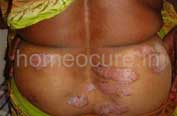
Psoriasis is considered an autoimmune disease with a strong genetic predilection. Some precipitating and aggravating causes include:
- Physiological changes of puberty and pregnancy
- Intercurrent infections
- Endocrine imbalance
- Physical trauma
- Mental stress
- Certain drugs such as antimalarials and NSAIDs
- Patients with HIV and AIDS
- Obesity and chronic alcoholism
Types and Clinical Features
Psoriasis Vulgaris
These are scaly, well-defined rashes on the extremities, trunk and scalp. Nail involvement is very common and often precedes the skin lesion. In the initial stage there is a small, well-circumscribed rash covered by dry, loosely attached silvery-white scales. On scraping, the white scales resemble wax candle; removal reveals a glistening red membrane. Small bleeding points are observed after breaking through the membrane, which indicates active disease. Early lesions have a typical salmon-pink colour, while chronic well-established lesions acquire a dusky bluish hue, especially on dark skin.
Active psoriasis is characterised by the appearance of new lesions at the site of trauma, infections, and injury. Sunlight can precipitate new skin lesions on exposed areas. The initial sites of involvement are the elbows and knees; others include scalp, trunk, back, palms, soles, and nails.
Patient photos â tap to reveal
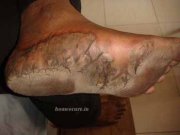
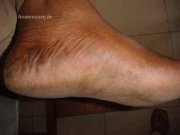
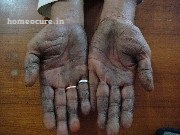
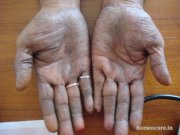
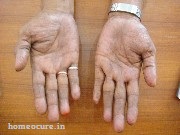
Healing psoriatic lesions become non-scaly and dusky in colour, often leaving behind post-inflammatory hyperpigmented macules, sometimes with a ring of hypopigmentation. Scalp involvement is either localised or diffuse. Flexural involvement is termed inverse psoriasis. The lesions have a shiny, smooth surface and absence of scaling. Scaly plaques studded with pustules or diffuse thickening of the skin are a common presentation on the palms and soles. Nail involvement is frequently associated with this variety of psoriasis.
The chronic type of psoriasis is a very stable form and may remain unchanged for many years, except for some seasonal variations, with winter aggravation.
Guttate Psoriasis
Commonly presents in children and young patients, characterised by sudden crops of small, shiny papules on the trunk and extremities. The characteristic scales are absent. In children, an upper respiratory tract infection is known to precede the skin lesions by 2 to 3 weeks. This variety often subsides within a few weeks.
Exfoliative Psoriasis
Abrupt discontinuation of steroids and administration of antimalarials are some precipitating factors for such sudden widespread involvement. Severe itching and burning are the main disturbing symptoms. Complications include irregularity in intestinal absorption of proteins and in water and electrolyte balance. Acute renal failure may occur due to diversion of large quantities of blood to the skin tissues.
Pustular Psoriasis
In this variety, tiny, superficial, sterile pustules appear either on the surface of psoriatic lesions or on previously unaffected skin. The localised variety mainly involves the palms and soles, while the generalised type has widespread involvement with severe constitutional symptoms.
Psoriatic Arthropathy
Pitting of the nails is an early and regular feature. The pits are deep-seated and uniformly distributed on the nails.